CHED-PP Checks via CERTEX: New EU Import Rules from March 2026
CHED-PP Checks via CERTEX: New EU Import Rules from March 2026
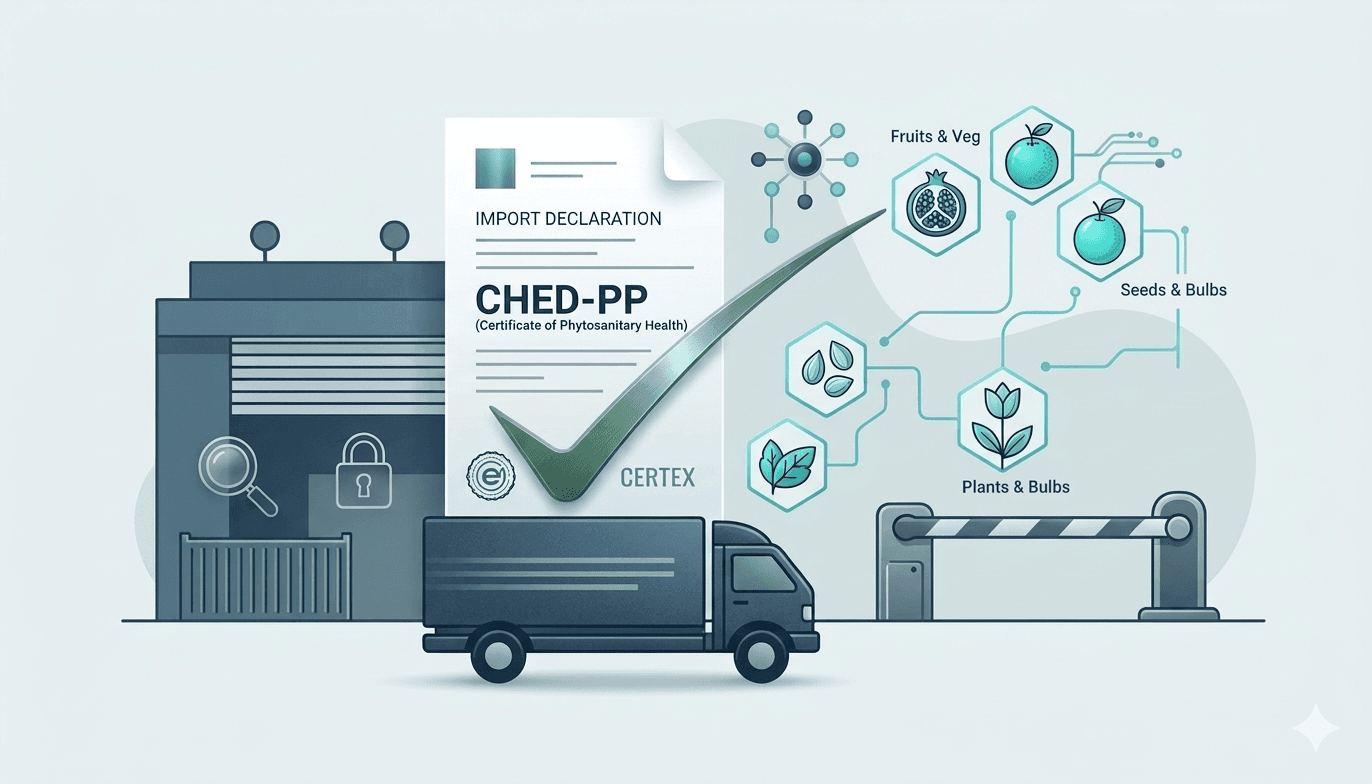
From March 2, 2026, EU Customs authorities will introduce automated verification of import declarations for phytosanitary goods using the CERTEX system. This change applies to all shipments that require a Common Health Entry Document for Plants and Plant Products (CHED-PP).
What is changing?
Customs will automatically validate import declarations for goods such as fruits, vegetables, flowers, and plants. This validation is performed through the European CERTEX system, which connects customs processes with non-customs regulatory systems.
The goal is to improve efficiency and ensure that goods entering the EU comply with health and safety requirements before being released.
What is CERTEX?
CERTEX is a European system that links customs with external regulatory platforms. It enables automated checks of required documentation, allowing authorities to make faster and more accurate decisions regarding the release of goods.
What is CHED-PP?
The Common Health Entry Document for Plants and Plant Products (CHED-PP) is a mandatory document for importing phytosanitary goods into the EU. It confirms that the goods meet plant health requirements.
Key requirements for import declarations
From March 2026, importers must ensure that all declaration data matches the information provided in the corresponding CHED-PP. Incorrect or incomplete data may result in rejection or delays.
- Provide the correct CHED-PP reference number
- Ensure shipment quantities match the CHED-PP
- Use the correct GN (commodity) codes
- Include required document codes such as C085 and N851
- Apply the correct additional codes, including the P2 code
Automated verification through TRACES
CERTEX performs document validation through the Trade Control and Expert System (TRACES), where phytosanitary documents are issued and managed within the EU.
For every import declaration, Customs will automatically check whether the required documents are present, accurate, and valid. This process is carried out in cooperation with national enforcement authorities such as the Netherlands Food and Consumer Product Safety Authority (NVWA).
Impact on importers
This change increases the importance of data accuracy in customs declarations. Any mismatch between the declaration and the CHED-PP may result in delays, additional checks, or rejection of the shipment.
However, when data is correct, the automated system can significantly speed up the clearance process.
How to prepare
- Ensure all CHED-PP data is complete and accurate
- Align internal systems with customs requirements
- Validate commodity codes and document references
- Train teams handling import declarations
Conclusion
The introduction of automated CHED-PP checks via CERTEX marks a shift toward more data-driven customs processes in the EU. While this improves efficiency and compliance, it also requires businesses to maintain high data quality standards.
By preparing early and ensuring accurate documentation, importers can avoid delays and benefit from faster customs clearance.